The work addressed both problems. It made the site discoverable and improved the homepage’s navigation.
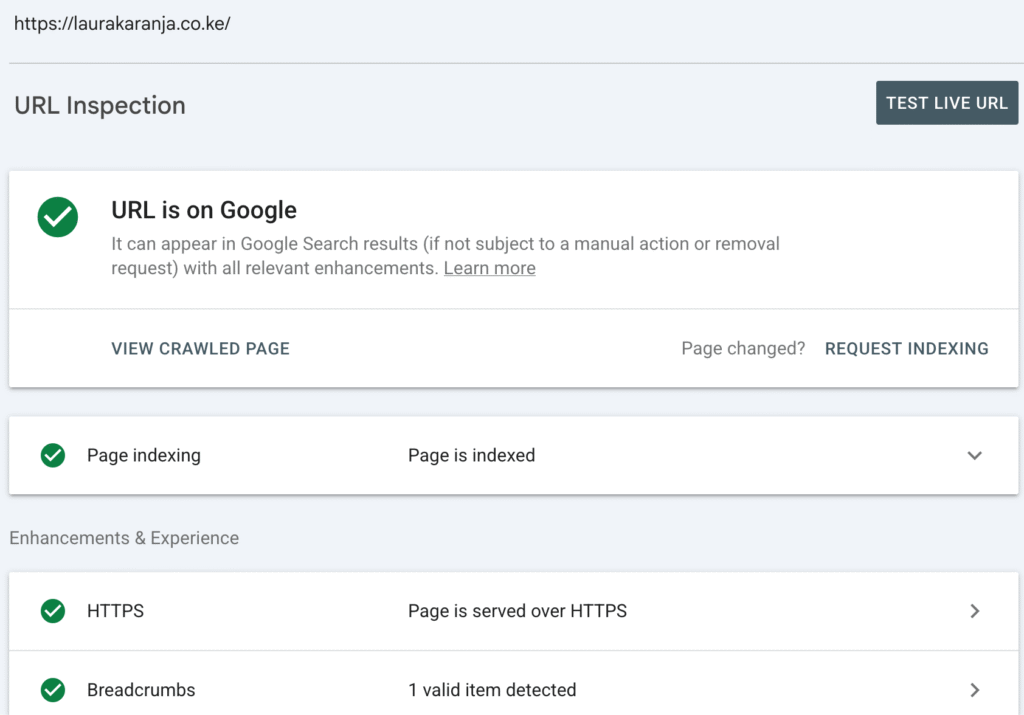
I started by removing the noindex setting. Then, verified the site in Google Search Console and submitted the sitemap. Now Google could discover all its pages.
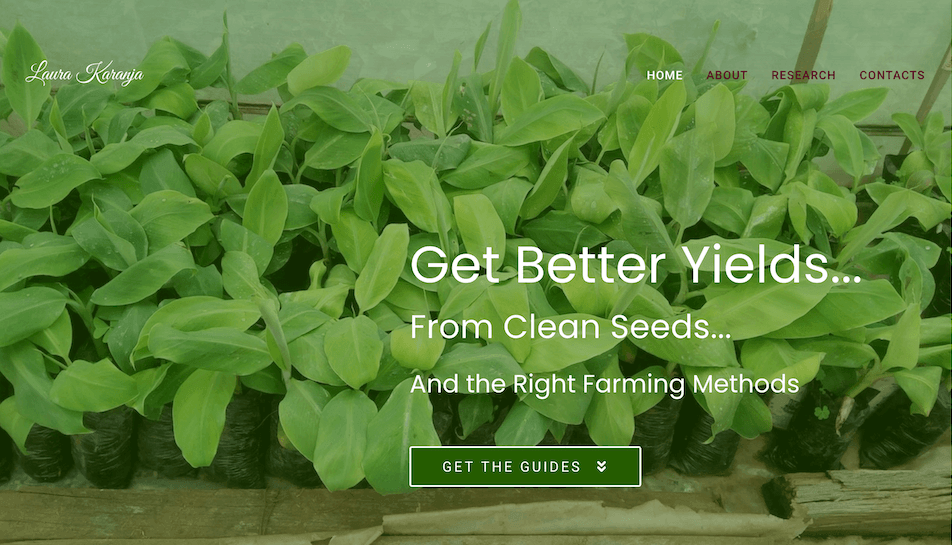
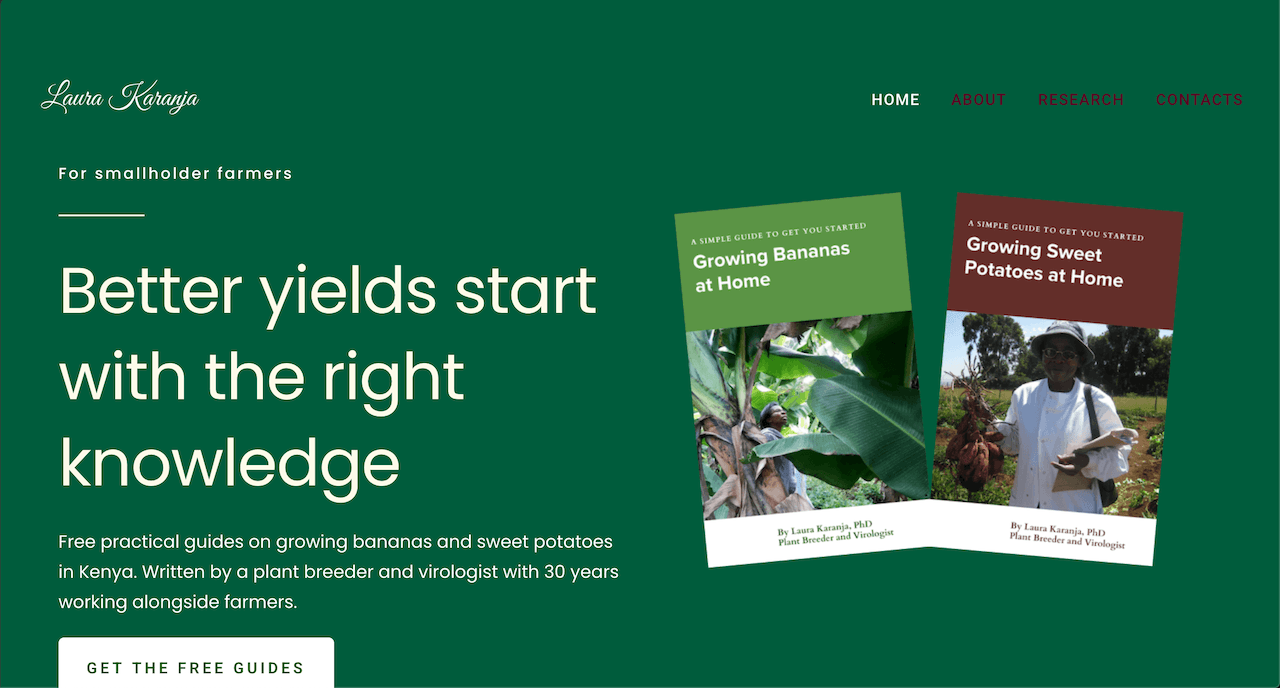
I rewrote the hero section. It now gave a single clear promise: ‘Better yields start with the right knowledge’. The subheadline introduced the guides while establishing Laura’s credentials. Now visitors know within seconds whether the page is for them. And take action by clicking the button that’ll take them to the download section.
I added images of both guide covers on the side of the hero header. It does two things: adds more visuals to the homepage and gives more information about the guides. It’s not text alone. The visitors have to do less guesswork.
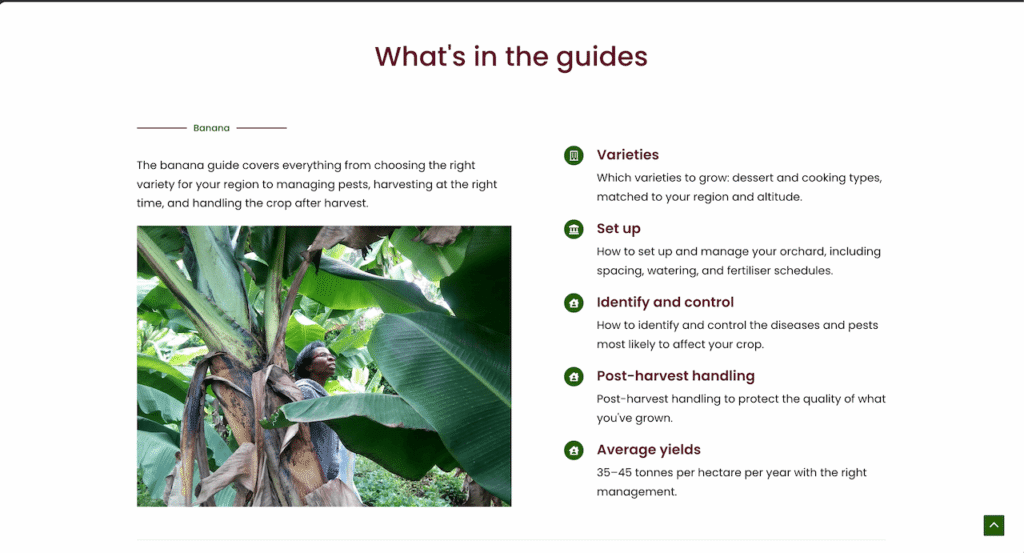
An added new section shows what’s inside each guide. It includes recommended varieties, plant setup, disease management, post-harvest handling, and expected yields. It also highlights expected yields for each crop per acre. These numbers help visualise the type of information expected in the guides.
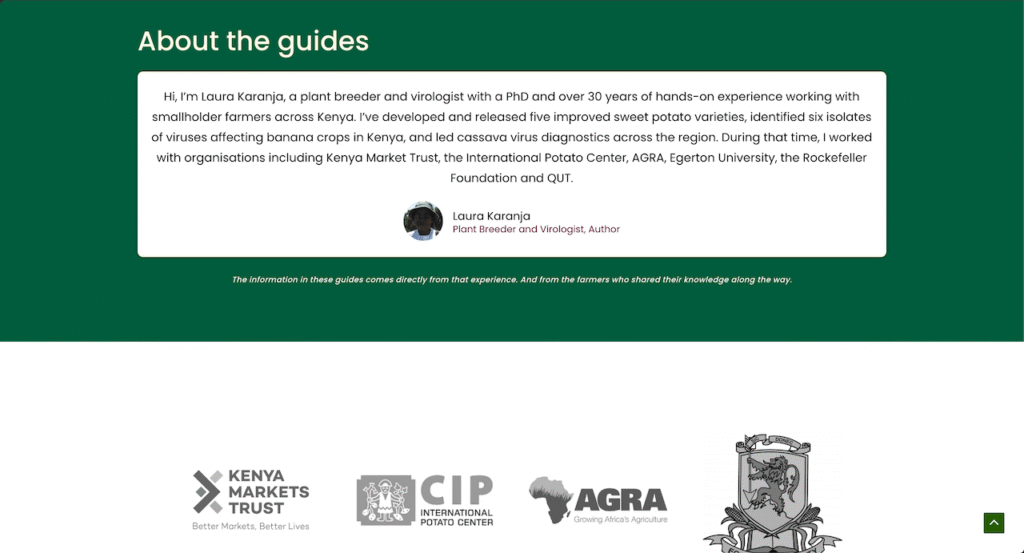
Laura’s biography and the organisation logos are below the guide content. The qualifications now reinforce the information in the guides. This makes it easier for the visitor to trust the information in the guides. The structure now follows that order.
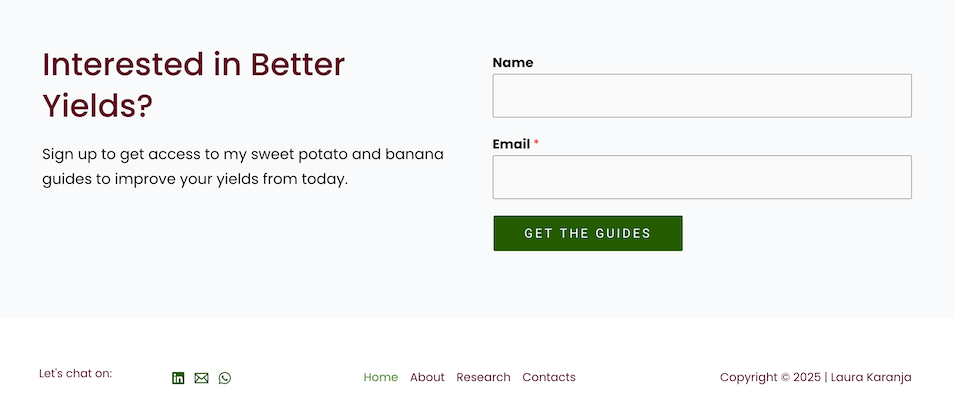
Finally, I replaced the email form. I first replaced the email form with two WhatsApp buttons, one for each guide. Clicking either would send a request message to Laura asking for a copy of the guide.
Though it worked, it ended up being too complicated. It created friction.
The farmers wanted to click and download. Not having to go through another step to get their download.
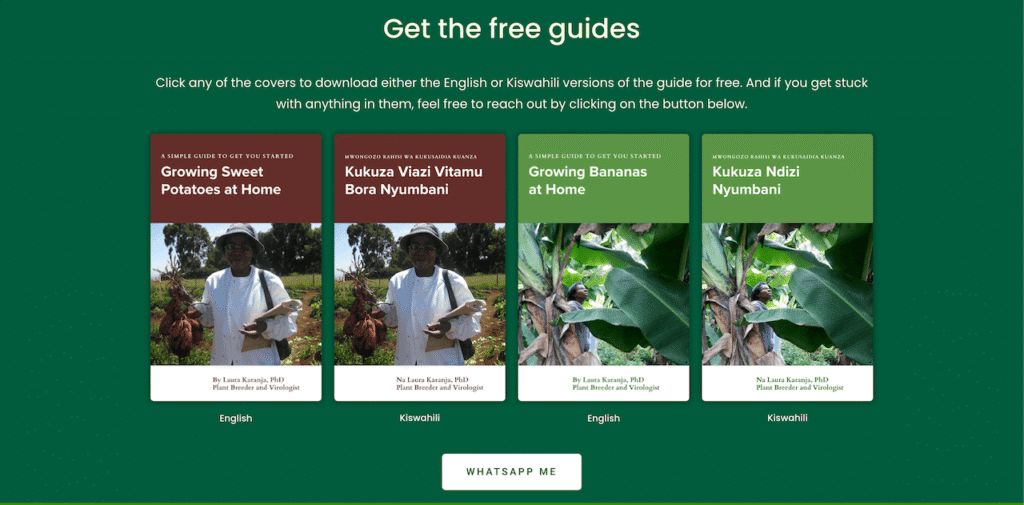
I replaced the buttons with the guide covers. Clicking on the covers would download the guide of their choice. There’s still a way to contact Laura. We agreed to put the WhatsApp button below the covers. It would be for anyone who needed more information or help with the guides.